
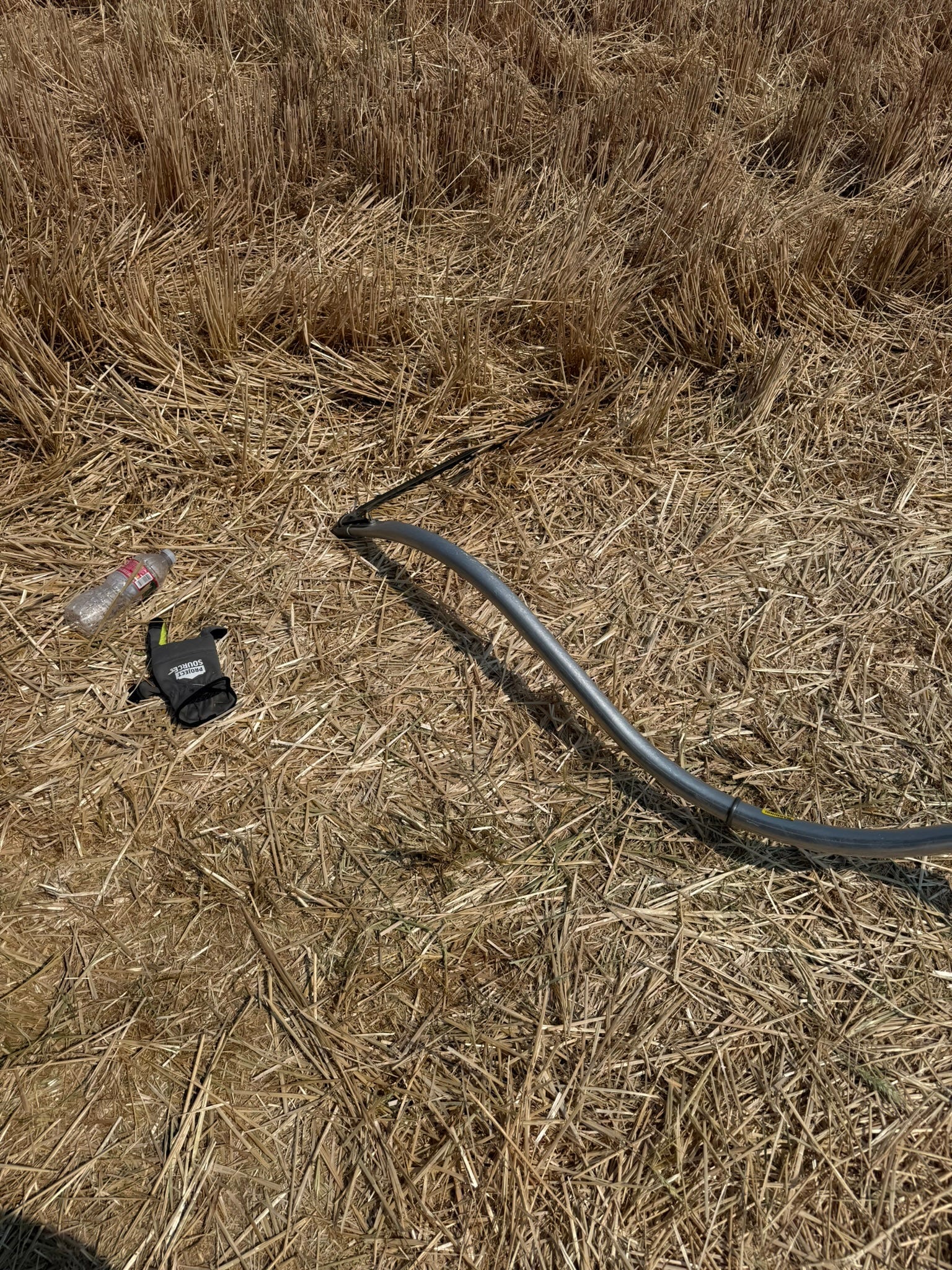
A scythe is the exact tool the Grim Reaper carries in the movies. That’s what we cut wheat with.
Every four years the matzah bakery my dad runs in the City of Industry needs to restock its flour, and every four years a small group of us flies out to a town in Oregon to cut it by hand. Not because there isn’t a machine that can do it in seconds. There is. We do it by hand because the whole bakery works that way, from the cutting of the wheat to the grinding of the kernels to the mixing of the dough to the rolling to the oven. Everything touched by hand, with consciousness, the whole way to Passover.
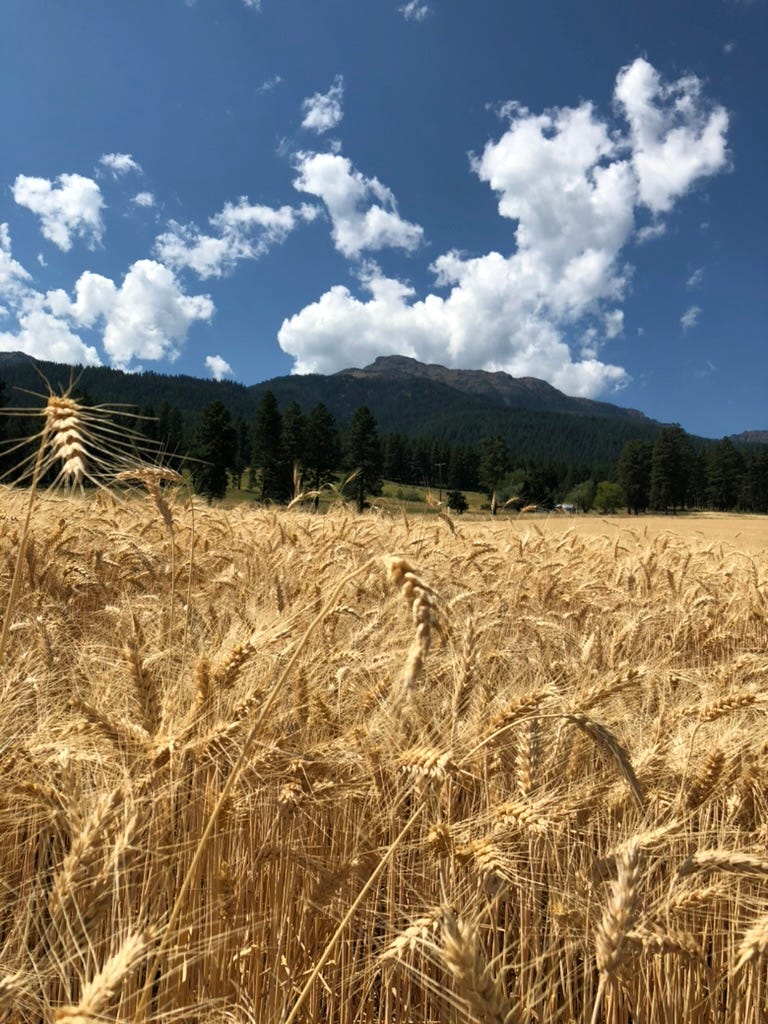
Four years ago I almost didn’t go. I was busy, it made no sense, and a friend who couldn’t make the trip talked me into taking his spot. It turned into one of the most beautiful trips of my life. Joseph, Oregon, population maybe twelve hundred, everybody knowing everybody, five of us showing up with scythes to a field with mountains in the background and nothing to hear but wind moving through wheat. It felt like the kind of senselessness that makes more sense than anything sensible does.
This year it almost didn’t happen again. Same season, same crunch, everyone busy or just back from vacation or buried in a project. Mine was an app I’m trying to get out the door. I had a trip to Miami booked for the day we landed back. None of it made sense. But I’ve learned something about that feeling by now: the harder it is to justify going, the more it usually means something. So I went.
Getting the dates locked took until the week before. Two weddings, my Miami trip, doctor’s appointments getting moved around, friend after friend on the list dropping off one by one, until it was down to four of us instead of five. Me, my friend Michael, my dad, and Gerson, who’d been on the trip four years ago too. I don’t think there was anything special about the four of us specifically. What I do think is that whoever ends up on a trip like this is supposed to be on it. Too much fell apart and then fell into place exactly right for it to be random.
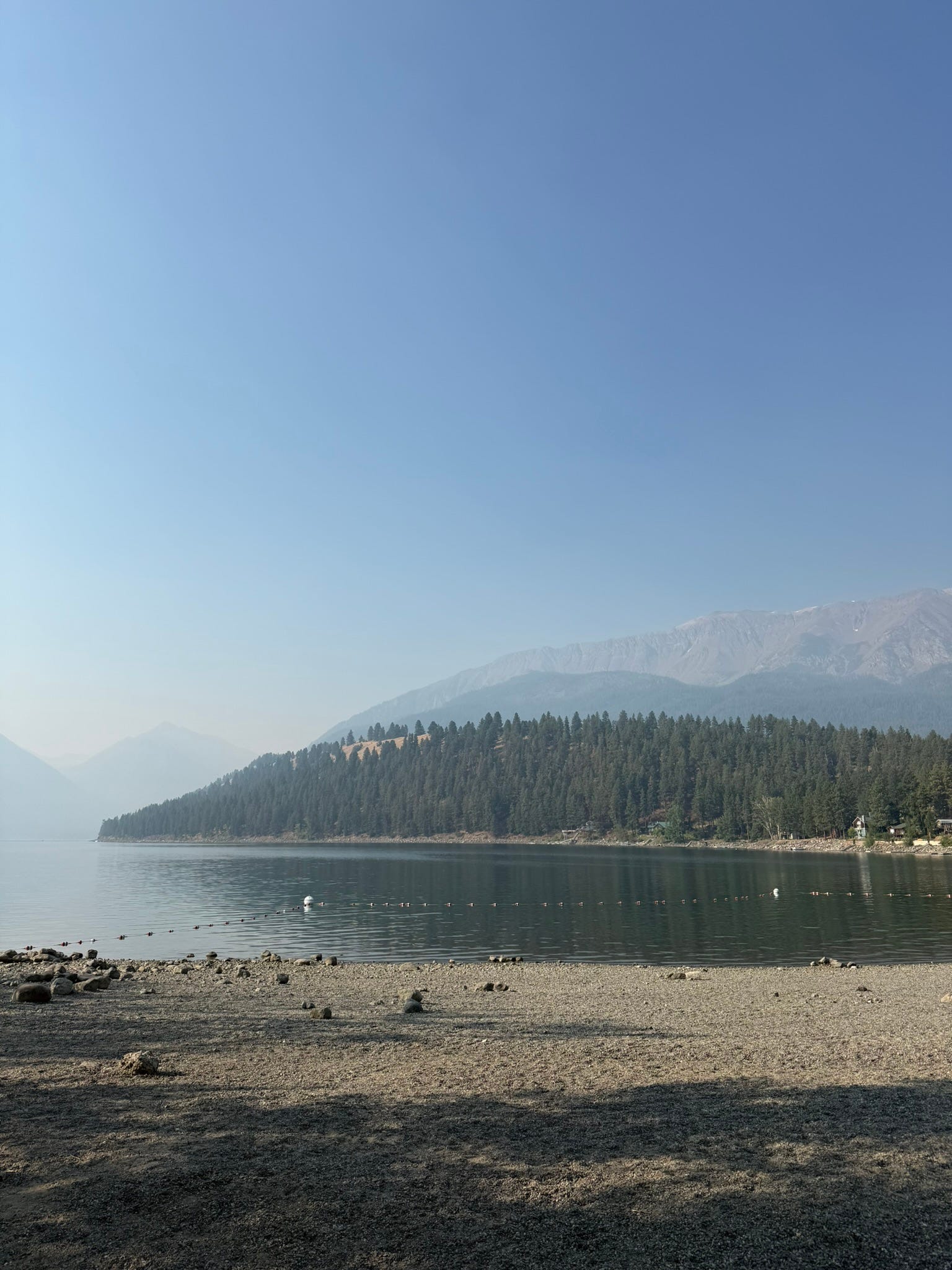
We flew into Washington this time, then drove two and a half hours toward Enterprise, Oregon, except a shortcut on Google Maps took us through roads closed from nearby fires, no service to reroute, driving in the dark past deer on the road, until we finally got to the hotel at three in the morning. Four hours of sleep later we were up, a small breakfast, water, energy drinks, and then the mikveh, a lake dip before anyone touches the wheat, because whoever touches it has to be pure. One of the most refreshing dips I’ve ever taken.
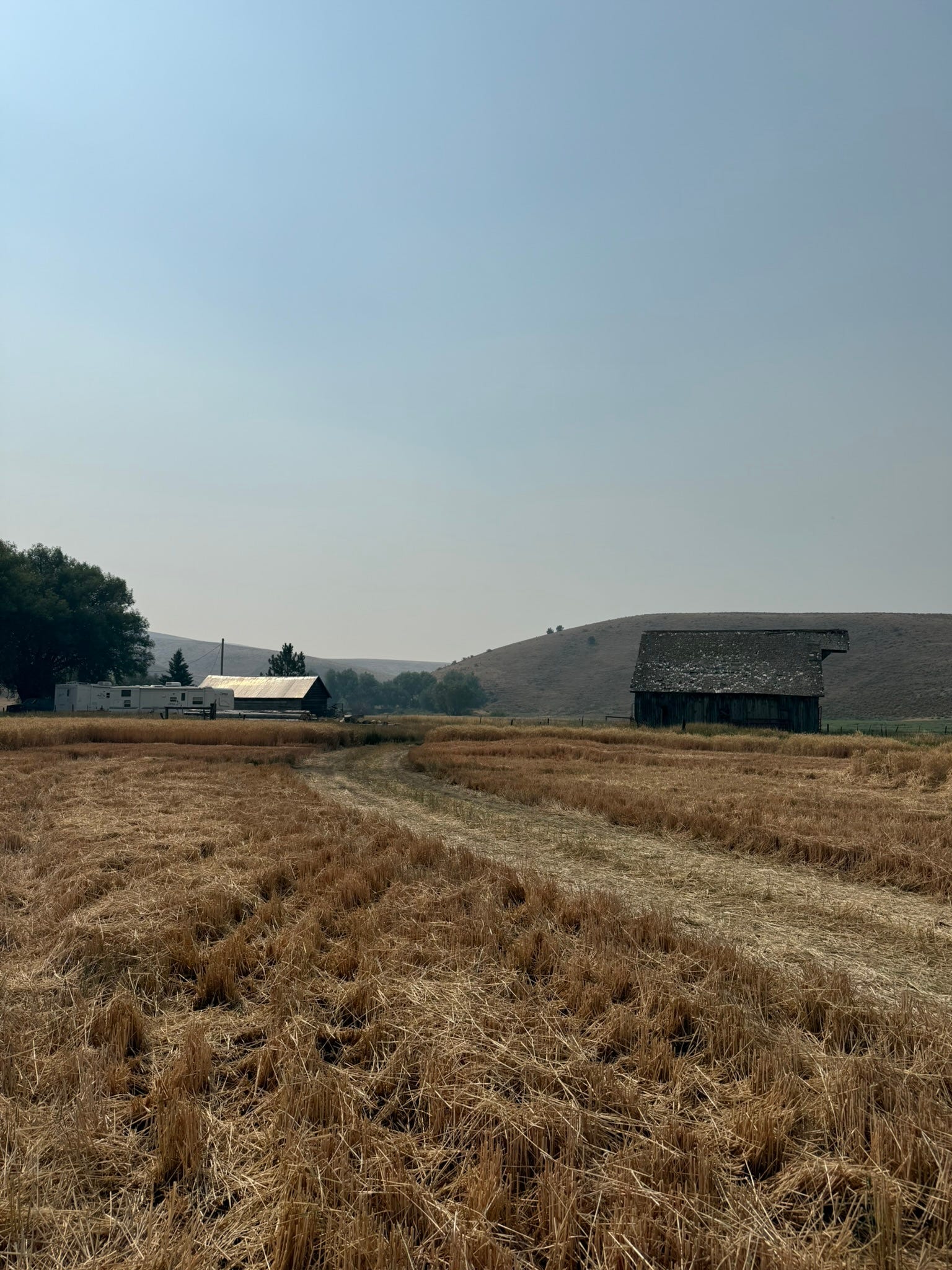
We started cutting around eleven. The field was different this year. No mountains this time, sky hazy from the smoke, just wheat and an old barn that looked burnt but was still standing. And no paths cut through the wheat like last time, just edges, which meant walking straight into it, wheat stabbing at your ankles the whole day. Same motion though. Right to left, full body, core braced, shoulder aching, kernels jumping into your shoes.
About two hours in, I stopped to sharpen my scythe, something I was more careful about this year after learning the hard way four years ago that a dull blade just bends the wheat instead of cutting it. I don’t know exactly what happened. Somewhere in the motion of sharpening it, my finger slid into the blade, cut straight through my glove and deep into my finger, and I felt the heat of blood before I felt anything else. No first aid out there, my dad and Gerson too far into the field to call. Michael was close. I stuffed my finger into my shirt to stop the bleeding, one of my favorite shirts, and Michael grabbed his sock, poured water over the gash, wrapped it tight. My vision started going white at the edges. Had to sit in the car for shade. My hand fully bloodied, my shirt stained, and the question sitting right there in front of me: is this it, am I done for the day.
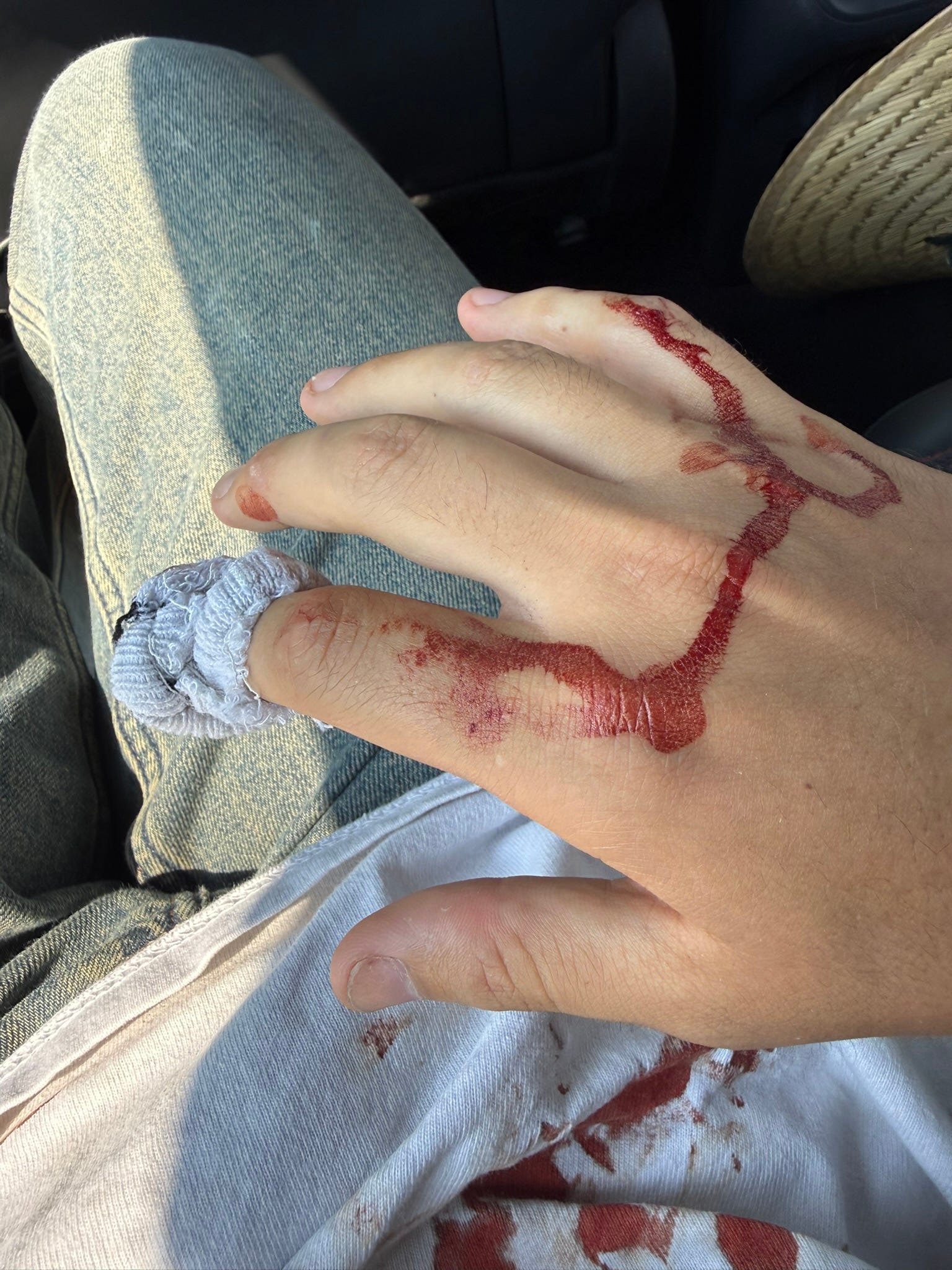
I sat with it for maybe fifteen minutes. My mind went blank, blank of excuses, blank of doubt, blank of fear. Clean. Stripped down to what actually mattered: I was here on a mission, cutting wheat for a bakery that would turn it into matzah for hundreds, thousands of people, sustenance some of them would carry for the rest of their lives, and I was going to complete it. I knew that the doubt I was feeling right then would never come back in that exact form. Two weeks from now, three, five, it would be gone. This was the only chance I’d have to face it. So it was my job to overcome it in that moment, and realize I could keep going.
Then I looked at my hand, put my glove back on my left, left the right one bare since the bandage wouldn’t fit under a glove, and went back out.
What I didn’t expect was to feel more energy coming back than I had going in. More in tune with the swing, the momentum, how much force to actually use. In flow. I got more done in the second half than I had in the first.
By 2:15 everyone was gassed, blistered through the gloves. My dad, in his sixties, working harder than any of us the entire day. We were sitting by the car, done, when he came over and told us to go back out. He said something I haven’t stopped thinking about, that the work we’d done so far was still work within our own capacity, and the work that actually changes something is the work that goes past what you thought you were capable of. You can meditate all day trying to change the world. But when you put your body somewhere your mind can’t fully explain, that’s the real work. I would have felt like an idiot not going back in after that. So we picked our tools back up, gloves still on the ground, shirts still bleeding, and did another round.
We collected just over 700 pounds, less than four years ago, even though it felt like we’d worked harder. It might last three years instead of four. That’s fine. I’d come back every year if that’s what it took.
The day ended in town, real food, a beer, sitting down for the first time in fifteen hours.
Less than twenty four hours later I was in the airport, flying from the wheat fields of Oregon straight to the beaches of Miami. My finger still cut open, probably needing stitches I still hadn’t gotten. And I sat there with the same question I’d been asking the whole trip. How does any of this make sense. Why do I keep ending up in these places doing these things.
I don’t think the purpose is only in the work you can point to. I think it’s in the detours, the doctor’s appointments getting rescheduled, the friends who drop out, the shortcut that takes you past a wildfire at midnight, the cut you didn’t see coming. Those are the things that give you something to stand on later, when you’re facing whatever you actually believe you’re here to do. There’s nothing that clarifies you faster than a force pushing back on you for reasons you can’t name, and choosing to carry through anyway.
Four years ago I would have picked apart every decision that led me here. Now I look back and it all looks exactly right. All of it. The trip, the cut, the flight to Miami I still don’t fully understand.
I know it’s for me.


